The Wedding Film Guide
How to Choose a Wedding Videographer: 15 Questions to Ask Before Booking
How to evaluate complete films, professional audio, reliability, deliverables, and the people trusted to preserve your wedding.
What should you ask before hiring a wedding videographer?
Before hiring a wedding videographer, ask to see complete films, confirm who will actually film your wedding, understand how your vows and speeches will be recorded, review every finished deliverable, and learn how your footage will be protected.
Those questions reveal far more than a highlight reel or package price alone.
A wedding filmmaker is responsible for preserving moments that cannot be recreated. Choosing one should involve more than comparing coverage hours, film lengths, drone footage, and price.
The strongest wedding films are created through preparation, observation, technical reliability, emotional awareness, and creative compatibility. The people behind the cameras will also spend much of the wedding day near you, your family, and your closest friends.
The goal is not to find the filmmaker with the longest equipment list. It is to find the team you trust with what cannot be repeated.
Begin here
The five most important questions
01
Can we watch complete films?
02
Who will film our wedding?
03
How will our voices be recorded?
04
What finished films will we receive?
05
How will our footage be protected?
What should you look for in a wedding videographer?
Complete-film quality
Storytelling, pacing, audio, and consistency across an entire celebration.
Technical reliability
Professional audio, appropriate camera coverage, and thoughtful backup practices.
Wedding-day presence
A calm, collaborative approach that helps the day feel natural rather than overproduced.
Creative fit
A style and philosophy aligned with what you want to remember.
Clear deliverables
A precise explanation of every film, its purpose, and what is not included.
Communication and trust
Transparent expectations from consultation through final delivery.
The right choice is the filmmaker whose work, process, and personality align with what you want preserved and how you want the day to feel.
The complete checklist
15 questions to ask a wedding videographer
01
Can we watch several complete wedding films?
Social clips, trailers, and portfolio reels show selected moments. Complete films reveal whether the storytelling, sound, pacing, and visual quality remain consistent throughout an entire celebration.
- Are vows and speeches clear?
- Does the story remain engaging beyond the opening minute?
- Are ceremony and reception scenes consistently strong?
- Does the film feel personal rather than templated?
Ask to see more than one example. Several films show whether the filmmaker can create consistently across different couples, venues, cultures, timelines, and lighting conditions.
Explore the Palmer Weddings films and pay attention to both the cinematic imagery and the voices carrying the story.
02
Who will actually film our wedding?
Some studios are led by one filmmaker who personally documents every celebration. Others use employees, associates, contractors, or rotating teams. None is automatically better or worse. What matters is transparency.
- Will the owner or lead filmmaker be present?
- Can we meet the assigned lead beforehand?
- Does the portfolio represent the team assigned to us?
- Who will edit the finished films?
You should understand whose experience, personality, and creative judgment you are hiring.
03
How many filmmakers do you recommend for our wedding?
The answer should be based on your celebration rather than a predetermined upsell.
An additional filmmaker may be valuable when partners prepare separately, important events happen simultaneously, the venue is large, or family reactions are a priority.
More filmmakers do not automatically create a stronger film. A thoughtful recommendation should explain what each person contributes and why the crew structure fits your locations, timeline, and desired films.
04
How many cameras will be used during the ceremony?
A ceremony unfolds through several simultaneous experiences. While one partner enters, the other reacts. Parents respond. The officiant speaks. Musicians perform. Traditions may occur in different parts of the ceremony space.
Ask how the filmmaker plans to preserve the processional, each partner, the officiant, a wide view, parents, guests, readers, musicians, and the recessional.
One camera can record the event. Multiple intentional perspectives can preserve the complete emotional exchange.
The number matters less than whether the filmmaker has a clear reason for each perspective.
05
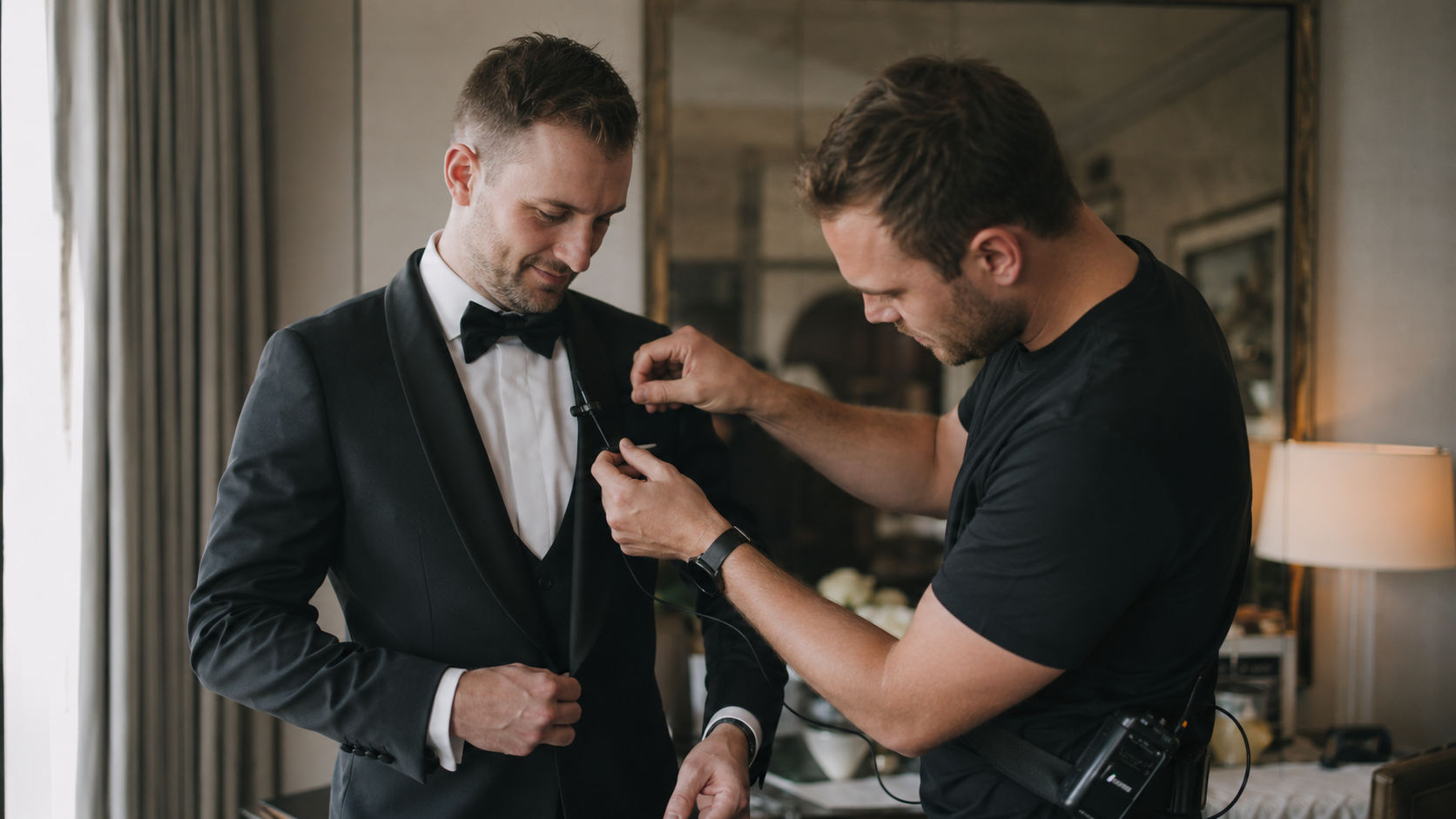
How will our vows, ceremony, and speeches be recorded?
Beautiful imagery cannot replace words that were never recorded clearly.
A professional audio plan may use dedicated microphones for the couple and officiant, direct sound-system feeds, independent recorders, speech-microphone feeds, and backup sources.
- How are outdoor wind and quiet speakers handled?
- How are private vows recorded?
- What happens when someone speaks away from the planned microphone?
- How is audio synchronized, restored, and mixed?
A camera-mounted microphone can preserve natural sound, but it should not be the only source responsible for vows spoken across a large ceremony space.
Professional audio is one reason the wedding videographer cost can vary significantly between proposals.
06
What happens if a camera, microphone, or recorder fails?
Equipment can fail even when experienced professionals prepare carefully. The difference is whether an irreplaceable moment depends on one device functioning perfectly.
Ask about backup cameras, independent audio sources, spare microphones, battery and power planning, memory-card practices, and how the team adapts when a device fails.
The answer should create confidence without becoming an overwhelming equipment inventory.
07
How will our footage be protected after the wedding?
The responsibility does not end when filming stops.
Ask whether multiple copies are created, whether working files remain backed up throughout editing, how long original footage is retained, and how final films are delivered.
A professional should describe a deliberate media-management process without exposing sensitive security details or promising that every file will be stored forever.
08
What finished films are included in our collection?
Coverage hours describe how long the team is present. They do not explain what you will receive.
Teaser or social film
A short preview designed for immediate impact and sharing.
Highlight film
A concise cinematic interpretation using imagery, dialogue, music, and selected moments.
Feature film
A developed narrative with more dialogue, relationships, events, and emotional progression.
Ceremony film
A complete multi-camera ceremony edit with synchronized professional audio.
Speech film
A dedicated edit preserving complete toasts or speeches.
Documentary or raw footage
Long-form chronological edits or unedited recordings, depending on the studio’s policy.
Review every deliverable line by line rather than assuming what terms such as “premium,” “full day,” or “complete coverage” mean.
Explore wedding-film collections or the planned wedding-film deliverables guide.
09
What does “full-day coverage” actually include?
“Full day” is not a universal industry definition. It may mean a fixed number of hours, coverage through a scheduled reception event, or continuous coverage with overtime billed separately.
It does not automatically include a complete ceremony, complete speeches, multiple filmmakers, rehearsal coverage, raw footage, or unlimited hours.
Ask when coverage begins, when it ends, how overtime is handled, and which events are expected to occur during that period.
A clear proposal should separate the time spent filming from the films delivered afterward.
10
How do you approach storytelling and editing?
“Cinematic” can describe many creative approaches. Ask how the filmmaker uses vows, speeches, natural sound, music, chronology, family relationships, and emotional themes.
Listen for whether the filmmaker talks only about camera movement and visual style or also discusses the people, voices, relationships, and atmosphere at the center of the celebration.
A montage presents attractive images. A narrative gives those images meaning.
Palmer Weddings shapes vows, speeches, movement, natural sound, and unscripted interactions into a film that feels cinematic while remaining grounded in the people who experienced the day.
11
How will music be chosen and licensed?
Music strongly influences the pacing and emotional identity of a wedding film.
Ask whether the filmmaker chooses the music, whether you may provide creative direction, how unavailable songs are handled, and whether music changes are permitted after editing begins.
Professionally distributed films should use music licensed for audiovisual use. Purchasing or streaming a song for personal listening does not itself provide permission to place that song in a film.
The strongest choice is not always the couple’s current favorite song. It is music that supports their voices, movement, atmosphere, and particular story.
12
How do you work with the photographer, planner, and venue team?
The photographer and filmmaker often need access to the same moments. The planner manages the timeline. The venue controls access and setup. Entertainment teams may manage microphones, music, power, and lighting.
Ask how the filmmaker coordinates first looks, private vows, portraits, sunset timing, ceremony positions, audio setup, speeches, reception lighting, and timeline changes.
The right answer should demonstrate collaboration rather than territorial behavior. The goal is to protect the couple’s experience while every professional performs their role.
13
How much direction will you give us?
Many couples want beautiful imagery without turning the celebration into a production.
Direction can help with flattering light, natural movement, private vows, portrait locations, and camera-conscious couples. Observation is more appropriate when a genuine family interaction or emotional moment is already unfolding.
Palmer Weddings provides direction when it serves the film and steps back when the real moment is already happening.
Cinematic should not mean staged. Learn more about the Palmer Weddings experience.
“Replace this with a genuine testimonial about feeling comfortable, receiving helpful direction, and barely noticing the cameras during the real moments.”Couple names · Venue or city
14
What happens when the timeline changes, weather turns, or drone coverage is unavailable?
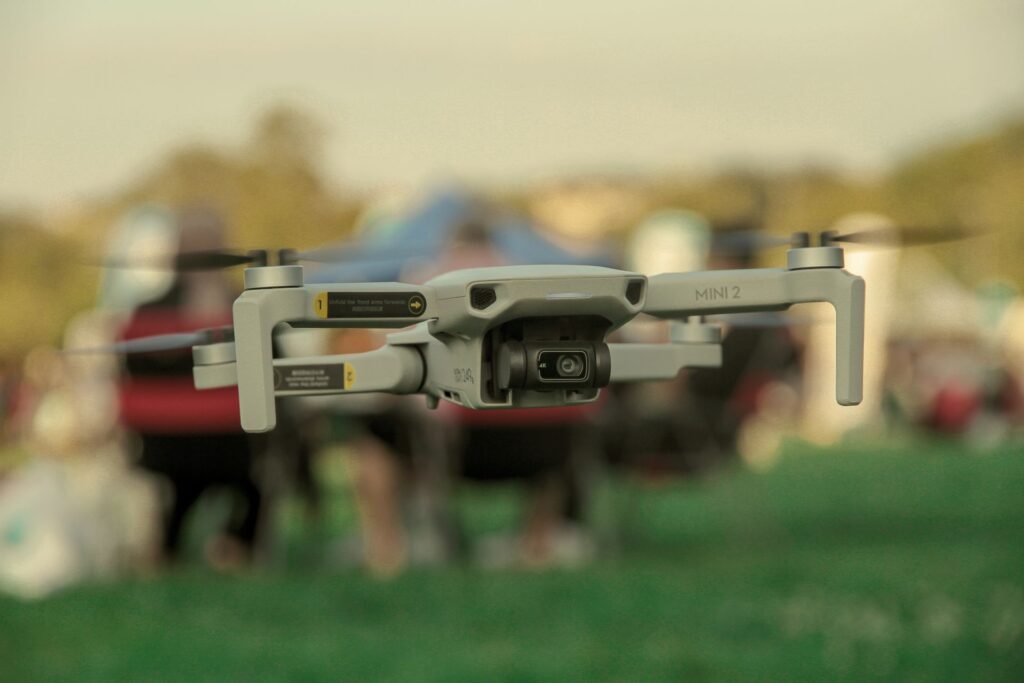
Weddings rarely unfold exactly as written. Preparations run late. Arizona heat changes portrait plans. Wind affects audio. Monsoon weather alters an outdoor ceremony. Venue access or airspace rules can affect drone coverage.
Ask how the filmmaker adapts through calm decision-making, planner communication, alternative coverage plans, flexible audio setups, and experience in changing light.
Drone footage should never be guaranteed without considering weather, airspace, venue permission, people, and safety. Commercial drone operations in the United States are subject to FAA Part 107 requirements and applicable operating restrictions.
Read more in the planned drone wedding videography guide.
15
What are the delivery timeline, revision process, and contract terms?
Before signing, confirm the expected delivery period, how the films will be delivered, how revisions work, whether music changes are permitted, the raw-footage policy, overtime and travel charges, payment terms, and postponement or cancellation policies.
Do not rely on assumptions from a consultation. The contract should clearly explain the services, deliverables, responsibilities, and limitations.
Creative trust is important. Clear expectations protect that trust.
Questions to answer before contacting a wedding filmmaker
Your consultations will be more useful when you have already considered what matters most to you.
Brief recap or complete story?
Decide whether you want one short film or a broader collection preserving complete events.
Which voices matter most?
Consider vows, parents, grandparents, siblings, friends, readings, and cultural traditions.
Do we want the full ceremony?
A highlight may include ceremony excerpts without preserving the complete event.
How much direction feels natural?
Consider documentary observation, editorial guidance, or a thoughtful combination of both.
Is the story one day or a weekend?
Welcome events often contain relaxed interactions that never occur during the formal timeline.
What will matter in twenty years?
The answer may be a parent’s voice, a grandparent’s reaction, or everyone you love gathered together.
Knowing what you value will help you recognize the filmmaker whose priorities align with yours.
Evaluate carefully
Potential red flags before booking
One concern does not automatically mean a filmmaker is unprofessional. Ask additional questions when:
- You are only shown short promotional reels
- The assigned wedding-day team cannot be identified
- Audio is treated as an afterthought
- Deliverables and contract terms remain unclear
- Drone footage is guaranteed under every circumstance
- Backup and delivery practices cannot be explained
- The portfolio does not represent the assigned team
- Every film follows the same structure regardless of the couple
- The filmmaker speaks dismissively about other wedding professionals
- You feel pressured to book before your questions are answered
Professional confidence should make the process clearer—not make you uncomfortable asking for information.
What a thoughtful wedding filmmaker should be able to explain
A professional filmmaker should clearly explain who will document the celebration, how the ceremony and voices will be recorded, why a particular crew plan is recommended, what films you will receive, how footage will be protected, and how the team will collaborate with your other professionals.
The answers should feel considered rather than rehearsed. They should demonstrate that the filmmaker has thought about your celebration—not only the package being sold.
Choose the team you trust with what cannot be recreated
The right wedding filmmaker is not necessarily the person with the most cameras, the longest list of awards, or the lowest proposal.
It is the team whose complete films move you, whose process gives you confidence, whose presence feels natural, and whose priorities align with what you want to preserve.
Your wedding film will carry more than images. It will carry voices, relationships, reactions, traditions, and moments you may not have seen while they were happening.
Choose the people you trust to recognize those moments. Choose the people you trust to preserve them.
Common questions
Frequently asked questions
What are the most important questions to ask a wedding videographer?
Ask to see complete films, confirm who will film the wedding, understand how vows and speeches will be recorded, review the finished deliverables, and ask how equipment and footage are backed up.
How far in advance should we book a wedding videographer?
Begin researching once your date and venue are confirmed. Availability varies by company, season, and destination, so couples planning popular dates or multi-day celebrations should inquire early rather than relying on one universal booking window.
Should we ask to see a complete wedding film?
Yes. Complete films reveal storytelling, audio quality, pacing, consistency, low-light performance, and ceremony coverage in a way that short portfolio reels cannot.
How many cameras should a wedding videographer use?
There is no universal number. The correct plan depends on the ceremony layout, traditions, venue restrictions, desired perspectives, and finished films. Ask what each camera will preserve rather than focusing only on the total.
Is a second wedding filmmaker necessary?
Not for every wedding. An additional filmmaker can be valuable when partners prepare separately, events happen simultaneously, the venue is large, or the couple wants more complete reactions and perspectives.
What should be included in a wedding videography contract?
The contract should describe coverage, filmmakers, deliverables, payment terms, delivery timing, travel, overtime, revisions, postponement or cancellation terms, and relevant responsibilities or limitations.
Should wedding-film music be licensed?
Yes. Music used in a professionally distributed wedding film should be appropriately licensed for audiovisual use. Streaming access or purchasing a song for personal listening does not by itself provide the required rights.
Palmer Weddings
Choose the team you trust with what cannot be recreated
Palmer Weddings creates cinematic wedding films through thoughtful preparation, professional audio, multiple perspectives, and storytelling centered on the people and relationships that make each celebration meaningful.