A direct answer to the wedding videographer cost question
The cost of a wedding videographer can range from several thousand dollars for limited event coverage to more than $10,000 for a complete cinematic production involving multiple filmmakers, professional audio recording, several cameras, extensive editing, and wedding-weekend coverage.
According to The Knot’s 2026 data, the average wedding videographer cost in the United States is approximately $2,300, with a reported Southwest regional average of $2,100. Zola reports a higher national average of $3,993, with many couples spending between $3,200 and $4,800.
The Knot
$2,300
Reported 2026 national average
Zola
$3,993
Reported 2026 national average
Published benchmarks combine many different levels of coverage, crew size, audio recording, editing, and finished-film delivery. Sources are listed at the end of this guide.
Those numbers can be useful when beginning a wedding budget, but they do not tell the complete story.
The term wedding videography can describe everything from a single camera recording several hours of the day to a multi-camera filmmaking team preserving the ceremony, vows, speeches, reactions, atmosphere, and relationships through professional audio and carefully constructed storytelling.
Both services may appear in the same average. They are not necessarily the same product.
The more useful question is not only, “How much does a wedding videographer cost?” It is also:
What will actually be preserved, how reliably will it be captured, and what kind of film will remain after the wedding day is over?
What is the average wedding videographer cost in 2026?
The Knot’s average comes from its Real Weddings Study, which collected responses from 10,474 couples married in the United States during 2025. Its current data places the national average at $2,300 and the Southwest average at $2,100.
Zola reports an average wedding videography cost of $3,993, with a typical range between $3,200 and $4,800. Zola derives its figures from wedding spending research, real couple budgets, vendor information, and activity within its planning tools.
The difference between these figures does not mean that one source must be wrong. It demonstrates why a single national average has limitations.
Wedding videography pricing can change considerably based on:
Coverage scope
The hours, events, and number of celebration days included.
Crew and cameras
The number of filmmakers, camera positions, and simultaneous perspectives.
Audio preservation
How vows, speeches, readings, music, and backup sources are recorded.
Finished films
The number, length, and depth of the films included in the collection.
Postproduction
Narrative editing, sound design, music licensing, color finishing, and delivery.
Experience and logistics
Consistency, planning, travel, venue access, setup, and production complexity.
Before comparing prices, couples should first determine whether they are comparing similar services.
Wedding-day coverage and cinematic wedding filmmaking are different services
Basic wedding video coverage is designed primarily to create a record of the event.
Cinematic wedding filmmaking is designed to preserve what the event looked, sounded, and felt like.
That difference influences the planning, crew, equipment, audio, editing, and finished films.
A complete wedding story may be found in:
- The anticipation before the ceremony
- A parent seeing their child dressed for the wedding
- The sound and pacing of the vows
- A partner’s reaction during the processional
- The words shared during the speeches
- Laughter between generations of family
- The atmosphere of the reception
- Quiet interactions away from the center of attention
Preserving those moments requires more than placing a camera near the ceremony and building a short montage afterward. It requires preparation, observation, multiple perspectives, reliable audio, technical redundancy, and an intentional editing process.
What affects the cost of a wedding videographer?
The scope of coverage
Coverage time is one of the most visible factors in wedding videography pricing, but the difference extends beyond the number of hours listed in a proposal.
Limited coverage may preserve the ceremony and a portion of the reception. More complete coverage gives the story room to include preparations, personal letters, family interactions, private vows, portraits, speeches, traditions, open dancing, and the final send-off.
The beginning of the day often establishes the relationships and anticipation that give later moments greater meaning. The end of the evening preserves the release, celebration, and energy that complete the story.
A multi-day celebration requires an even broader production plan. Welcome parties, rehearsal dinners, cultural events, family gatherings, and farewell celebrations can all become part of the final narrative.
The number of filmmakers
Weddings frequently unfold in several places at once.
One partner may be preparing while the other exchanges a gift with family. Guests may be arriving while final details are being completed. During the processional, the entrance and the reaction at the altar happen simultaneously.
An additional filmmaker can provide:
- Coverage of both partners’ preparations
- More complete family and guest coverage
- Additional ceremony perspectives
- Reactions during vows and speeches
- Coverage of transitions between locations
- Greater production flexibility and redundancy
The purpose is not simply to create more footage. It is to preserve meaningful moments that happen at the same time.
The number and placement of cameras
Multiple cameras allow a ceremony or speech to be preserved from several perspectives without repeatedly moving one camera during an important moment.
Consider the moment one partner walks down the aisle. One camera can preserve the entrance. Another can preserve the reaction at the altar. A wider perspective can show the setting and guests. An additional angle may capture a parent or grandparent experiencing the moment.
A single perspective can document the event. Several intentional perspectives can preserve the complete emotional exchange.
This becomes especially important when the couple will receive a complete ceremony film rather than only brief excerpts within a highlight.
Professional audio recording
The emotional foundation of a wedding film is often found in the voices.
Vows, speeches, readings, personal messages, and spontaneous reactions give the imagery meaning. Without clear audio, many of the most important parts of the story cannot be fully preserved.
A professional audio plan may involve:
- Dedicated microphones for the couple and officiant
- Ceremony sound-system feeds
- Independent recorders and backup sources
- Speech-microphone feeds
- Private-vow recording
- Music and ambient sound
Palmer Weddings does not rely solely on a camera’s built-in microphone to record vows from across a ceremony space.
Multiple audio sources are used because an irreplaceable moment should not depend on one microphone, one recorder, or one connection working perfectly.
The work continues after the wedding through synchronization, restoration, balancing, mixing, and integrating the voices into the finished story.
The finished films included
“Wedding video” can refer to several very different deliverables. Two collections can include the same number of coverage hours while providing substantially different finished work.
Teaser film
A brief preview designed for immediate emotional impact and easy sharing.
Highlight film
A concise cinematic interpretation using vows, speeches, portraits, and unscripted moments.
Feature film
A developed narrative allowing more dialogue, relationships, events, and emotional transitions.
Ceremony film
A complete multi-camera ceremony edit with professionally synchronized audio.
Speech film
A dedicated edit preserving the complete words shared by family members and friends.
Documentary edit
A longer chronological preservation of meaningful portions of the celebration.
Wedding-weekend film
A broader story incorporating events before or after the wedding day.
Complete collection
A coordinated set of films preserving both the cinematic story and complete events.
The long-term value is shaped by what the couple ultimately receives—not only by how long the cameras were present.
The editing and storytelling process
The work of creating a cinematic wedding film continues long after the reception ends.
Postproduction may involve:
- Reviewing and organizing footage from every camera
- Synchronizing video and professional audio sources
- Reviewing vows, speeches, and personal messages
- Identifying relationships and recurring emotional themes
- Building the narrative structure
- Selecting and licensing music
- Restoring and mixing audio
- Refining pacing and visual continuity
- Color correcting and finishing the imagery
- Creating complete ceremony and speech films
- Conducting technical quality control
- Preparing and preserving the final files
The Knot also identifies editing and postproduction as meaningful cost factors alongside coverage, crew size, travel, and location.
A story-driven wedding film is not assembled chronologically simply because that is how the footage was recorded. A line from a parent’s speech may connect with an earlier preparation moment. A sentence from the vows may introduce a scene later in the evening. A ceremony reaction may complete an idea expressed during the reception.
Editing is where the footage becomes a story.
Experience and consistency
Experience should not be measured only by how long someone has owned a camera.
Couples should consider whether a filmmaker can consistently:
- Record clear vows and speeches
- Work in bright sunlight and dim reception spaces
- Anticipate meaningful interactions
- Coordinate with planners and photographers
- Respond calmly when the timeline changes
- Protect footage through reliable backup systems
- Deliver complete films at a consistent creative standard
A short portfolio reel can show a filmmaker’s strongest visual moments. A complete film reveals whether the storytelling, sound, pacing, color, and emotional continuity remain strong throughout an entire wedding.
Why some wedding films cost more than the average
Palmer Weddings is intentionally positioned above broad national averages because the scope and purpose of the work are different.
We are not simply creating a record that the wedding happened. We are building a cinematic and emotional record of the people, voices, relationships, and atmosphere that made it meaningful.
We preserve the voices
Vows, speeches, private messages, and meaningful words help form the narrative foundation of the film.
We preserve simultaneous moments
Multiple cameras and filmmakers allow entrances, reactions, and interactions to become part of one complete story.
We use cinematic craft naturally
Composition, movement, light, sound, and color elevate the celebration without turning it into a film set.
We create a narrative
Vows, speeches, music, environment, and unscripted moments are shaped into one emotionally coherent film.
We preserve more than highlights
Complete ceremonies, speeches, and voices often become increasingly meaningful as time passes.
We plan for reliability
Multiple cameras, independent audio, backup recorders, protected storage, and technical review reduce avoidable risk.
Explore the difference
See what a complete cinematic wedding-film collection can preserve.
Review the coverage, films, and preservation options available through Palmer Weddings.
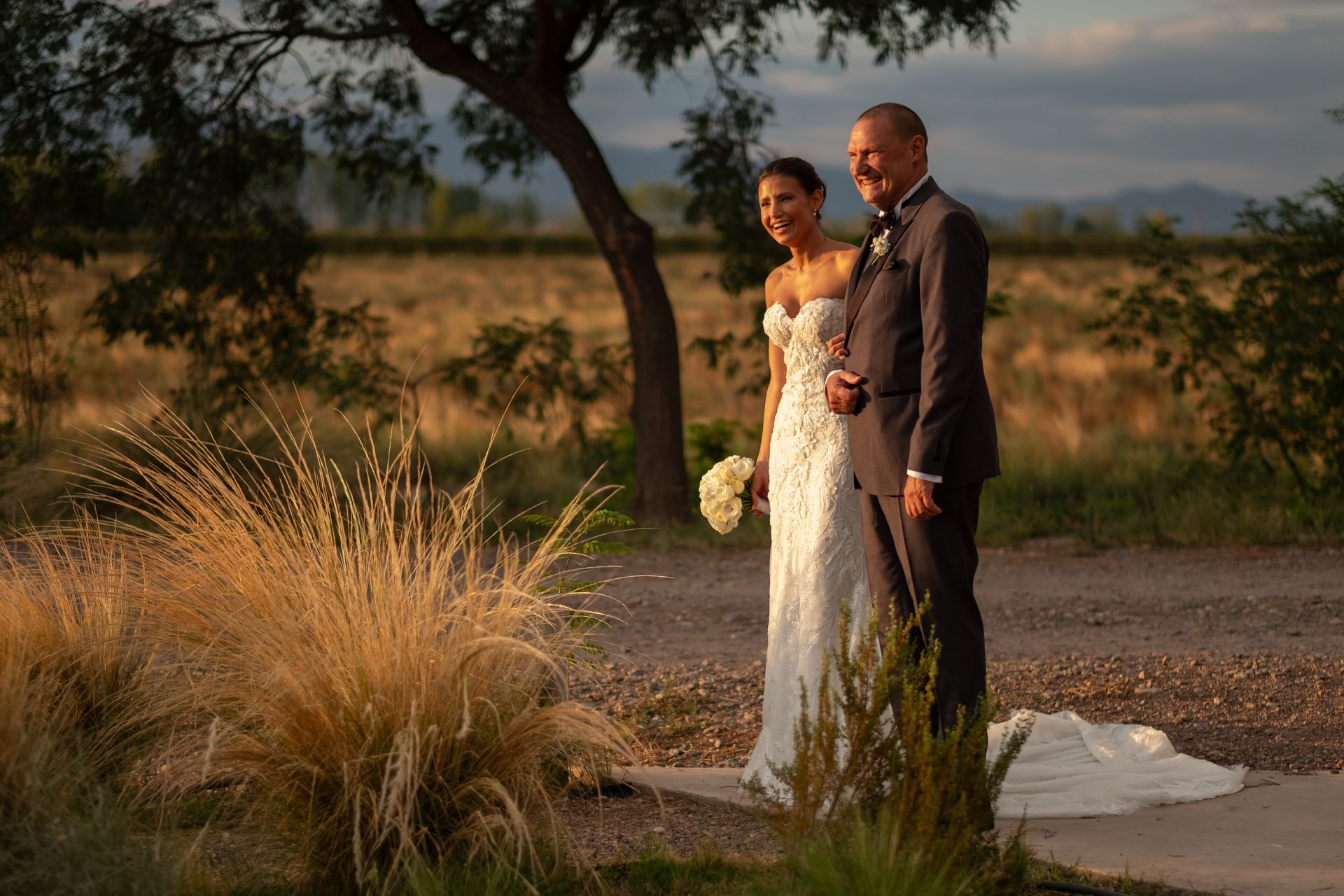
How much should Arizona couples budget for wedding videography?
There is no single responsible Arizona wedding-videography price that applies to every celebration.
The Knot reports a Southwest regional average of approximately $2,100, but that figure includes many different service levels, production scopes, crew sizes, and deliverables. It should not be interpreted as a quote for a multi-camera cinematic production.
An intimate weekday ceremony, a Scottsdale resort wedding, a multi-location Phoenix celebration, and a destination weekend in Sedona require different production plans.
An Arizona wedding-film proposal may be influenced by the number of celebration days, venue logistics, travel between locations, crew requirements, ceremony layout, audio complexity, access and setup time, finished-film selections, and destination travel.
The most useful budgeting approach is to identify what you want preserved and then compare proposals offering similar coverage, crew, audio, finished films, and production depth.
Explore location-specific work from Palmer Weddings as an Phoenix wedding videographer, Scottsdale wedding videographer, and Sedona wedding videographer.
How to compare wedding videography proposals fairly
Comparing only the total price can be misleading.
Can we watch complete wedding films?
Short reels are designed to show a filmmaker’s strongest individual moments. Complete films reveal whether the storytelling, audio, pacing, and visual quality remain consistent throughout an entire wedding.
How will our vows and speeches be recorded?
Ask who will receive dedicated microphones, whether the ceremony and reception sound systems will be recorded, and whether independent backup audio sources will be used.
How many filmmakers and cameras will be present?
The number alone is not the most important issue. Ask how the crew and cameras will preserve simultaneous moments, reactions, and complete events.
What finished films will we receive?
Confirm every deliverable, including its approximate length and format. Do not assume that “full-day coverage” automatically includes a full ceremony film, complete speeches, raw footage, or an extended documentary edit.
Who will film our wedding?
Some studios use associate filmmakers or rotating crews. That may be appropriate, but couples should understand who will be present and whether the portfolio represents that team’s work.
How is our footage protected?
Ask about backup cameras, audio redundancy, media handling, storage, and the process used to protect the footage after the wedding.
How will the filmmaking team work with our planner and photographer?
Wedding filmmaking should complement the rest of the creative team. The filmmakers should coordinate coverage, portraits, lighting, and the timeline without making the couple feel caught between competing productions.
Is the most expensive wedding videographer always the best?
No.
A higher wedding video cost does not automatically guarantee stronger storytelling, better service, or the right creative fit.
Look beyond the price and consider:
- The emotional impact of the films
- The clarity of the vows and speeches
- The quality and consistency of complete films
- The relevance of the deliverables
- The professionalism of the team
- The clarity of the contract
- The filmmaker’s wedding-day approach
- Whether the creative style feels authentic to you
Luxury should be evident in the process and finished work—not merely printed in the marketing.
It should be visible in the preparation, reliability, attention to sound, completeness of coverage, consistency of the storytelling, and the way the couple is treated throughout the experience.
Is a cinematic wedding film worth the investment?
That depends on what you want to preserve.
Some couples may be completely satisfied with limited ceremony coverage or a brief visual recap.
A more complete cinematic production becomes especially meaningful for couples who want to:
- Hear their vows again
- Preserve parents’ and grandparents’ voices
- Relive complete speeches
- See reactions they missed
- Remember the movement and atmosphere of the celebration
- Preserve cultural and family traditions
- Share the story with future generations
- Receive a carefully constructed film rather than only short clips
The value of a wedding film often changes with time.
Immediately after the celebration, couples may be drawn to the venue, design, portraits, and energy of the reception. Years later, the most valuable scene may be the sound of a parent’s voice, a grandparent’s reaction, the laughter of a close friend, or a quiet interaction no one else noticed.
The flowers and décor exist for a day. The film preserves the people who were there.
The difference is what remains
The right wedding-film investment is not determined only by the number of hours a camera is present.
It is determined by what you want to hear, see, and feel again after the wedding day has passed.
Palmer Weddings creates cinematic wedding films for couples who want their celebration preserved with depth, intention, and care—from the vows and relationships to the atmosphere and unscripted moments in between.
Your wedding happens once.
The film determines how completely you can return to it.
Common questions
Frequently asked questions
What is the average cost of a wedding videographer in 2026?
The Knot reports a national average of approximately $2,300, while Zola reports an average of $3,993 and a typical range between $3,200 and $4,800. The figures differ because the research methods and services included are not identical.
Why does cinematic wedding videography cost more?
A cinematic production may include multiple filmmakers, several cameras, dedicated microphones, backup audio sources, longer coverage, complete ceremony and speech films, narrative editing, sound design, color finishing, and extensive postproduction.
Is a second wedding filmmaker worth it?
A second filmmaker can be especially valuable when partners prepare in separate locations, important events happen simultaneously, or the couple wants additional reactions and perspectives preserved.
Does full-day coverage include a complete ceremony film?
Not automatically. Coverage time describes how long the filmmaking team is present. Finished deliverables should be listed separately in the proposal and contract.
How is wedding videography different from a wedding content creator?
A wedding content creator generally focuses on quickly delivered, social-first clips. A wedding filmmaker typically uses professional cameras, dedicated audio systems, licensed music, and a longer postproduction process to create complete cinematic films.
Should we choose a wedding videographer based on price?
Price matters, but it should be considered alongside complete films, audio quality, crew size, deliverables, experience, reliability, communication, and creative fit.
Sources and methodology
- The Knot: The Average Cost of a Wedding Videographer — updated May 11, 2026.
- Zola: Wedding Videographer Cost—Average Prices and Packages — updated March 4, 2026.