The Wedding Film Guide
Is Drone Wedding Videography Worth It?
When aerial footage adds scale, geography, and atmosphere to a wedding film—and when weather, airspace, venue rules, safety, or storytelling priorities make ground coverage more important.
Is drone wedding videography worth it?
Drone wedding videography is worth it when the aerial perspective adds something the ground cameras cannot: the scale of a destination, the relationship between the venue and landscape, the geography of a multi-location celebration, or an establishing image that gives the wedding story a sense of place.
It is less valuable when the aerial footage exists only to prove that a drone was present.
Aerial footage should earn its place in the film just like every other shot.
A handful of intentional aerial images may add more to a wedding film than minutes of repetitive flying. The goal is not maximum drone coverage. The goal is stronger storytelling.
What does drone footage add to a wedding film?
Geography
Where the story takes place
Aerial footage can reveal desert, mountain, forest, coastline, resort grounds, or other landscape that defines the destination.
Scale
How the venue fits the environment
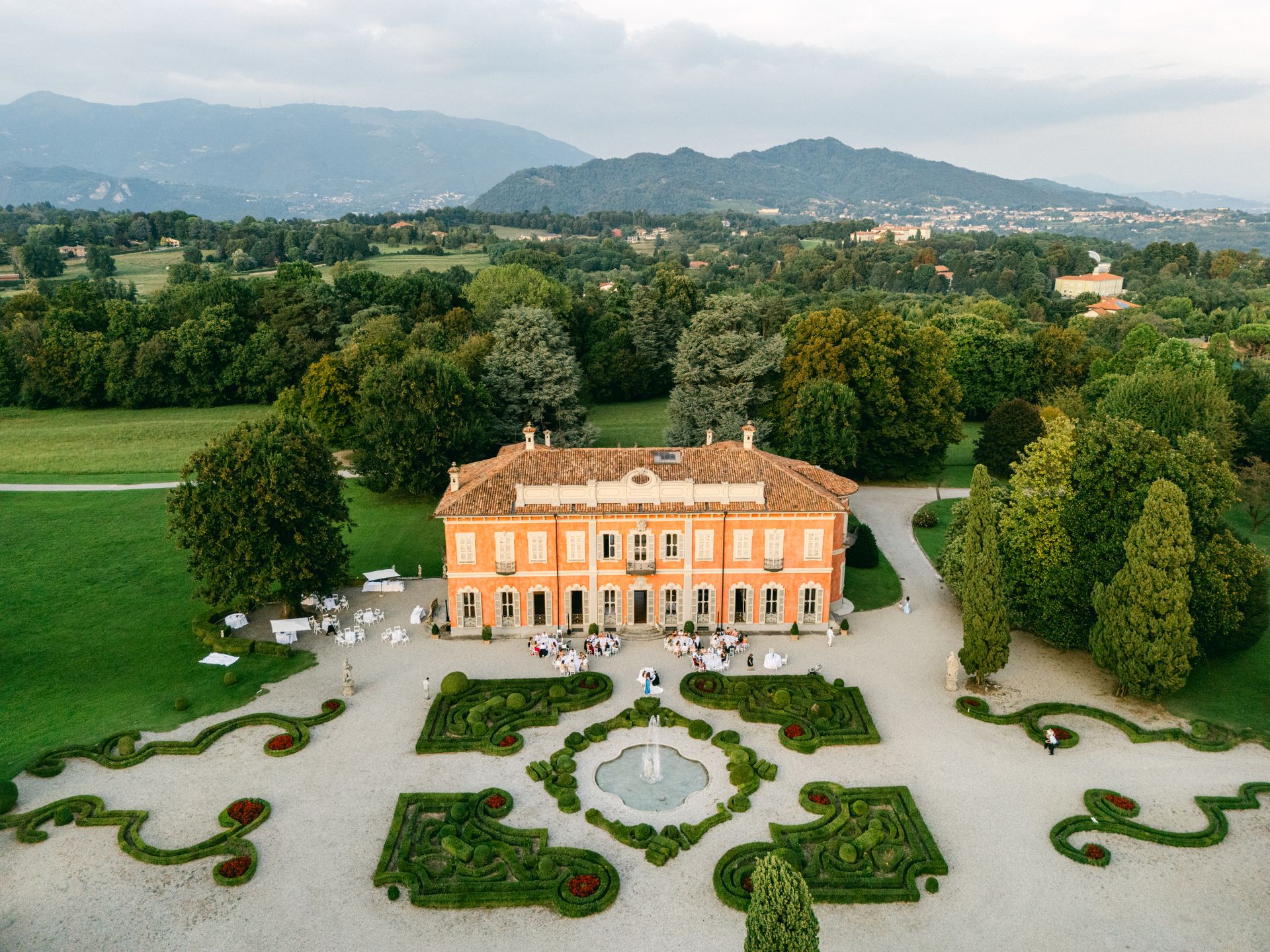
A ground camera may show a ceremony arch. A drone can reveal the estate, canyon, mountain, or surrounding property around it.
Orientation
How locations connect
Aerial establishing images can help a film transition between preparation spaces, ceremony locations, resorts, and reception areas.
Atmosphere
A sense of arrival
A carefully chosen aerial opening can create quiet anticipation before the film moves into the people and voices at the center of the story.
The most effective aerial footage usually answers a visual question: Where are we, how large is this place, or why does this location matter?
When is drone wedding videography especially valuable?
Drone imagery becomes most useful when the environment is part of the wedding experience.
- Destination weddings
- Desert or mountain venues
- Large estates and private properties
- Resorts with meaningful architecture or grounds
- Vineyards, ranches, and remote ceremony locations
- Waterfront or landscape-driven venues
- Weddings spread across several nearby locations
- Arrival or departure sequences where geography helps tell the story
In these settings, aerial footage can function as more than decoration. It can explain the scale and location of the celebration before the film moves closer to the people within it.
The stronger the relationship between the wedding and its setting, the more useful an aerial perspective tends to become.
When does drone footage add very little?
Not every venue benefits from aerial coverage.
A drone may add little when the celebration is primarily indoors, the venue is tightly surrounded by commercial development, the exterior does not contribute to the story, the timeline leaves little safe operating time, or flying would create more distraction than value.
There are also weddings where the most important images are simply too intimate for a drone to contribute meaningfully.
The drone can show where the wedding happened. It cannot replace the expression on your partner’s face when you walked down the aisle.
A wedding film should not sacrifice vows, reactions, portraits, speeches, or family interactions because the crew is focused on capturing another aerial pass.
Can wedding drone footage always be guaranteed?
No.
Responsible drone coverage depends on conditions that may change before or during the wedding.
- Airspace restrictions and required FAA authorization
- Temporary Flight Restrictions or other active flight restrictions
- Venue or property-owner permission
- Wind, rain, dust, visibility, or rapidly changing weather
- Safe takeoff and landing space
- People, traffic, or obstacles in the planned flight area
- The amount of time available within the wedding schedule
- The remote pilot’s safety judgment at the time of the operation
A professional should never promise that an aerial shot will be captured under every possible circumstance.
The absence of drone footage should never mean the wedding film is incomplete. Ground cinematography remains the foundation of the story.
Current operating considerations
What FAA rules affect wedding drone videography?
In the United States, commercial small-drone operations are generally conducted under the FAA’s Part 107 rules. A Part 107 operator must hold a Remote Pilot Certificate, and Part 107 aircraft must be registered as required.
Operations in controlled airspace around airports require FAA authorization. The FAA’s Low Altitude Authorization and Notification Capability, or LAANC, can provide access to controlled airspace at or below 400 feet where available, subject to the authorization and applicable limitations.
Temporary Flight Restrictions can also prohibit or limit drone operations in an area for a period of time. The FAA advises pilots to check applicable NOTAMs and TFRs before flight.
Flying over people is governed by specific Part 107 operating categories and conditions. A crowded wedding should never be treated as permission to hover over guests simply because an aerial image would look dramatic.
Remote ID requirements also apply to drones that are required to be registered, except in limited circumstances defined by the FAA.
A professional wedding drone operator should plan the flight before the wedding—not discover the airspace limitations after arriving at the venue.
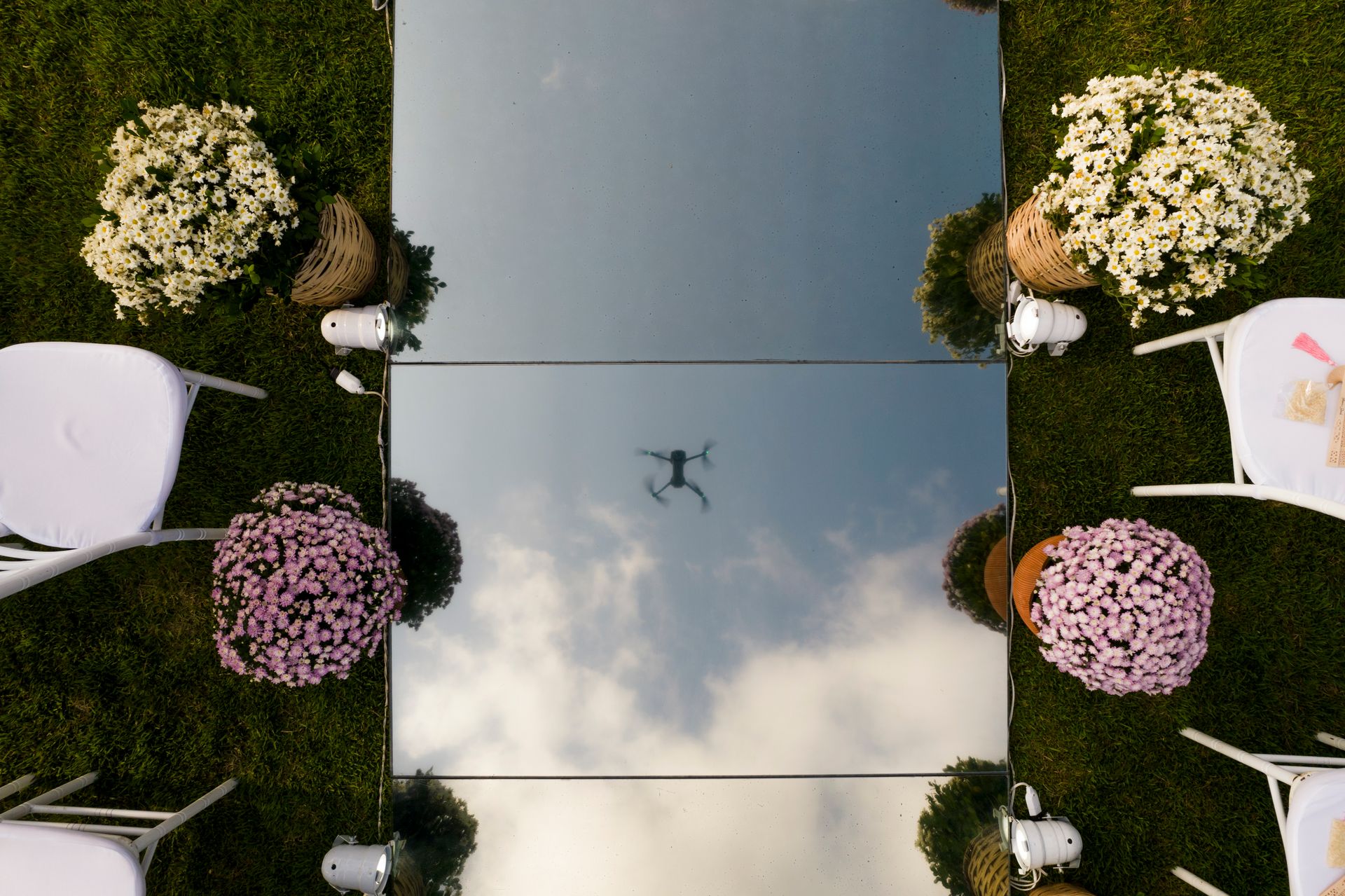
How do weather and Arizona conditions affect drone coverage?
Arizona can provide spectacular aerial imagery, but the same environment that makes the landscape visually powerful can also affect flight planning.
- Strong or changing winds
- Monsoon storms and rapidly developing weather
- Dust and reduced visibility
- Extreme summer temperatures
- Mountain or canyon wind patterns
- Sunset timing and rapidly changing light
A filmmaker may decide that the safest or most useful flight window occurs hours before the ceremony rather than during it.
That is one reason aerial coverage should be integrated into the production plan instead of treated as a spontaneous add-on.
Where does drone wedding videography add value in Arizona?
Sedona
Landscape as part of the story
Red-rock geography can give aerial footage a clear storytelling purpose: establishing the destination and showing how the celebration sits within the surrounding landscape.
Scottsdale
Resorts and desert context
Large resort grounds, desert architecture, mountain views, estates, and open properties can benefit from carefully chosen aerial establishing images.
Phoenix
City, desert, and mountain scale
Mountain backdrops, desert properties, and destination resorts can create strong aerial context, while exact airspace conditions must always be checked for the specific location.
The value comes from the relationship between the venue and its surroundings—not simply from being high above the property.
Does drone footage replace ground cinematography?
No. Ground coverage is more important.
The emotional center of a wedding film is usually found at eye level: the vows, the reaction at the altar, a parent’s expression, a hand being held, a speech, a quiet conversation, or the energy of the reception.
Drone footage can establish the world surrounding those moments. It cannot preserve the voices or subtle reactions that give them meaning.
Aerial perspective
Context and scale
Shows the destination, venue, landscape, architecture, and physical relationship between locations.
Ground perspective
People and emotion
Preserves vows, faces, touch, reactions, family relationships, movement, and the sound of the celebration.
The aerial shot establishes the world. The ground cameras preserve the people who made that world meaningful.
How much drone footage belongs in a wedding film?
Usually less than couples expect.
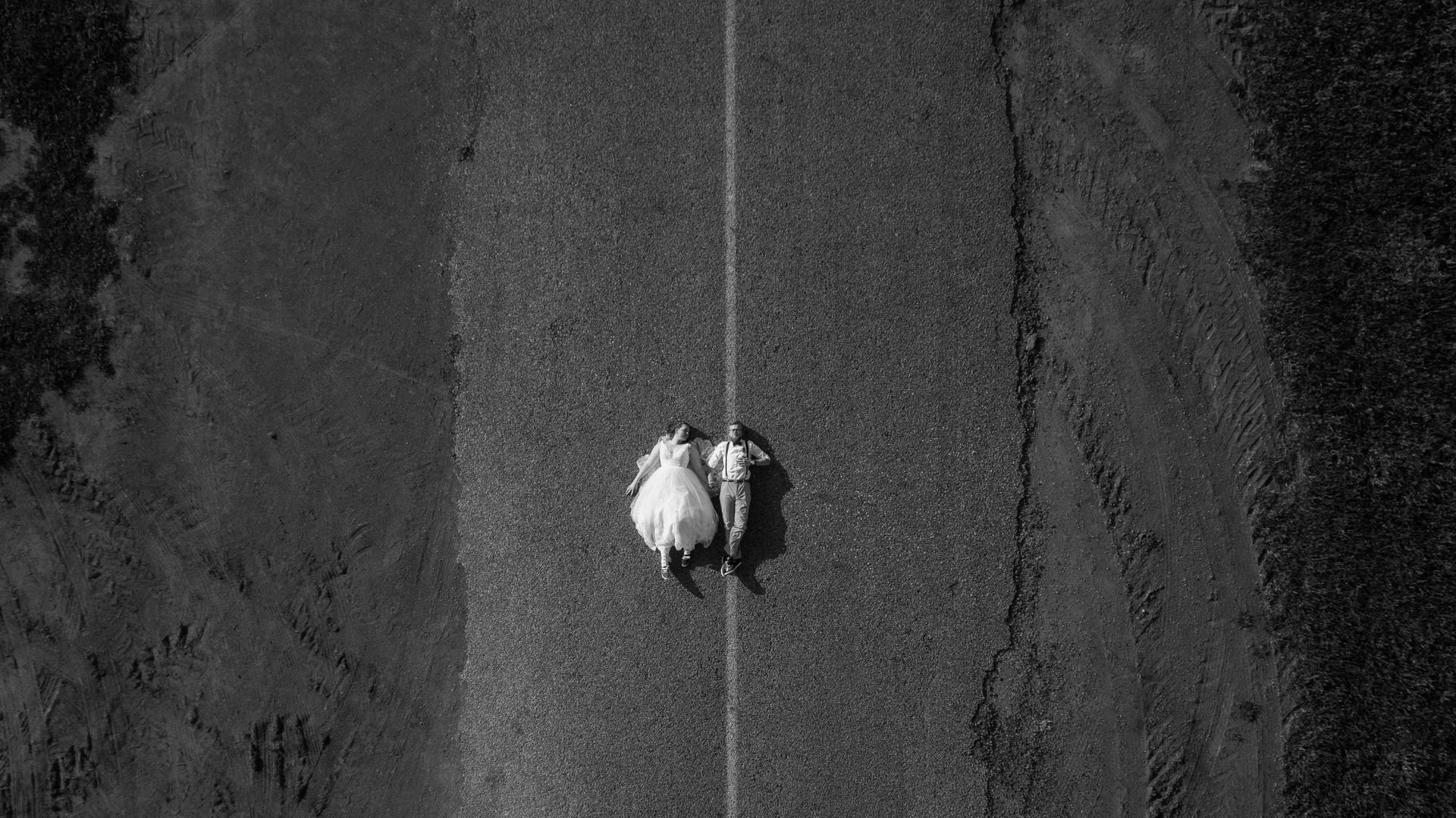
A few strong aerial images can establish location, transition into a new part of the day, or provide a moment of visual scale before the film returns to the people.
Repeated passes over the same venue can quickly become visually impressive but emotionally empty.
The best drone shot is not the longest or highest. It is the one that gives the story information the ground cameras cannot.
This is consistent with the broader Palmer Weddings approach: cinematic craft should serve the real story rather than becoming the story itself.
Should drone wedding videography cost extra?
There is no universal industry model.
Some filmmakers include aerial coverage within certain collections when conditions allow. Others offer it as an optional addition. Some productions require a separate remote pilot because the primary filmmaker cannot safely operate a drone while covering another part of the wedding.
Destination travel, complex airspace, remote launch locations, additional crew, or specialized logistics can also affect the production scope.
Do not compare proposals based solely on whether the word “drone” appears in the package.
Our guide to wedding videographer cost explains why crew, audio, deliverables, logistics, and postproduction matter more than a single equipment feature.
Questions to ask your wedding videographer about drone coverage
Who will operate the drone?
Ask whether the operator holds the required FAA Remote Pilot Certificate for the commercial operation.
Is drone coverage included or optional?
Clarify whether it is part of the collection, an additional service, or dependent on a separate operator.
Is aerial footage subject to weather and airspace?
The answer should be yes. Responsible operators should not promise flight regardless of conditions.
Do you check airspace restrictions before the wedding?
Ask how controlled airspace, TFRs, NOTAMs, and required authorizations are reviewed during planning.
Does our venue allow drones?
Property permission and venue policies can matter even when the airspace itself permits flight.
What happens if the drone cannot fly?
The collection should remain complete through strong ground coverage rather than depending on one aerial shot.
How will the aerial footage actually be used?
Look for a storytelling answer—location, scale, transition, or atmosphere—rather than “because it looks cinematic.”
For a broader consultation checklist, read our 15 questions to ask a wedding videographer before booking.
The Palmer Weddings approach to aerial filmmaking
We use aerial imagery when it adds scale, geography, atmosphere, or narrative context—not simply because we brought a drone.
The wedding film remains centered on the people.
Professional audio preserves the voices. Ground cameras preserve expressions and relationships. Multiple perspectives preserve simultaneous moments. Aerial footage, when appropriate and safely available, gives those moments a larger sense of place.
A drone is one filmmaking tool among many. The story determines whether it belongs in the film.
Explore the Palmer Weddings films, review our collections, or learn more about the wedding-film experience.
Common questions
Frequently asked questions
Is drone footage worth having in a wedding video?
It can be when the venue, destination, landscape, or geography adds meaningful context to the story. It is less useful when the aerial perspective does not reveal anything important about the setting.
Can a wedding videographer guarantee drone footage?
No responsible operator should guarantee flight under every condition. Airspace, temporary restrictions, venue permission, weather, people, safe launch areas, and pilot judgment can all affect whether a flight can take place.
Does a wedding drone pilot need an FAA certificate?
Commercial small-drone operations in the United States are generally conducted under Part 107, which requires the remote pilot to hold an FAA Remote Pilot Certificate and comply with applicable operating rules.
Can drones fly near airports?
Operations in controlled airspace around airports require FAA authorization. LAANC can provide authorization at or below 400 feet in participating areas, subject to the approved altitude and other applicable restrictions.
Can a drone fly directly over wedding guests?
Operations over people are governed by specific Part 107 categories and conditions. A wedding crowd should not be treated as unrestricted airspace over which a drone may simply hover.
How much drone footage should be in a wedding film?
Only as much as the story needs. A few purposeful establishing shots can often add more value than extended aerial sequences that repeat the same venue or landscape.
Is drone footage more important than traditional wedding videography?
No. Ground cinematography and professional audio preserve the voices, expressions, reactions, and relationships at the center of the wedding. Aerial footage provides additional context when the setting benefits from it.
FAA sources and further reading
- Federal Aviation Administration: Small UAS Regulations—Part 107
- Federal Aviation Administration: Low Altitude Authorization and Notification Capability (LAANC)
- Federal Aviation Administration: Temporary Flight Restrictions
- Federal Aviation Administration: Operations Over People
- Federal Aviation Administration: Remote Identification of Drones
Palmer Weddings
Aerial when it adds meaning. Grounded where the story lives.
Palmer Weddings combines professional audio, multiple perspectives, intentional cinematography, and aerial imagery when it genuinely adds scale or context to the celebration.